
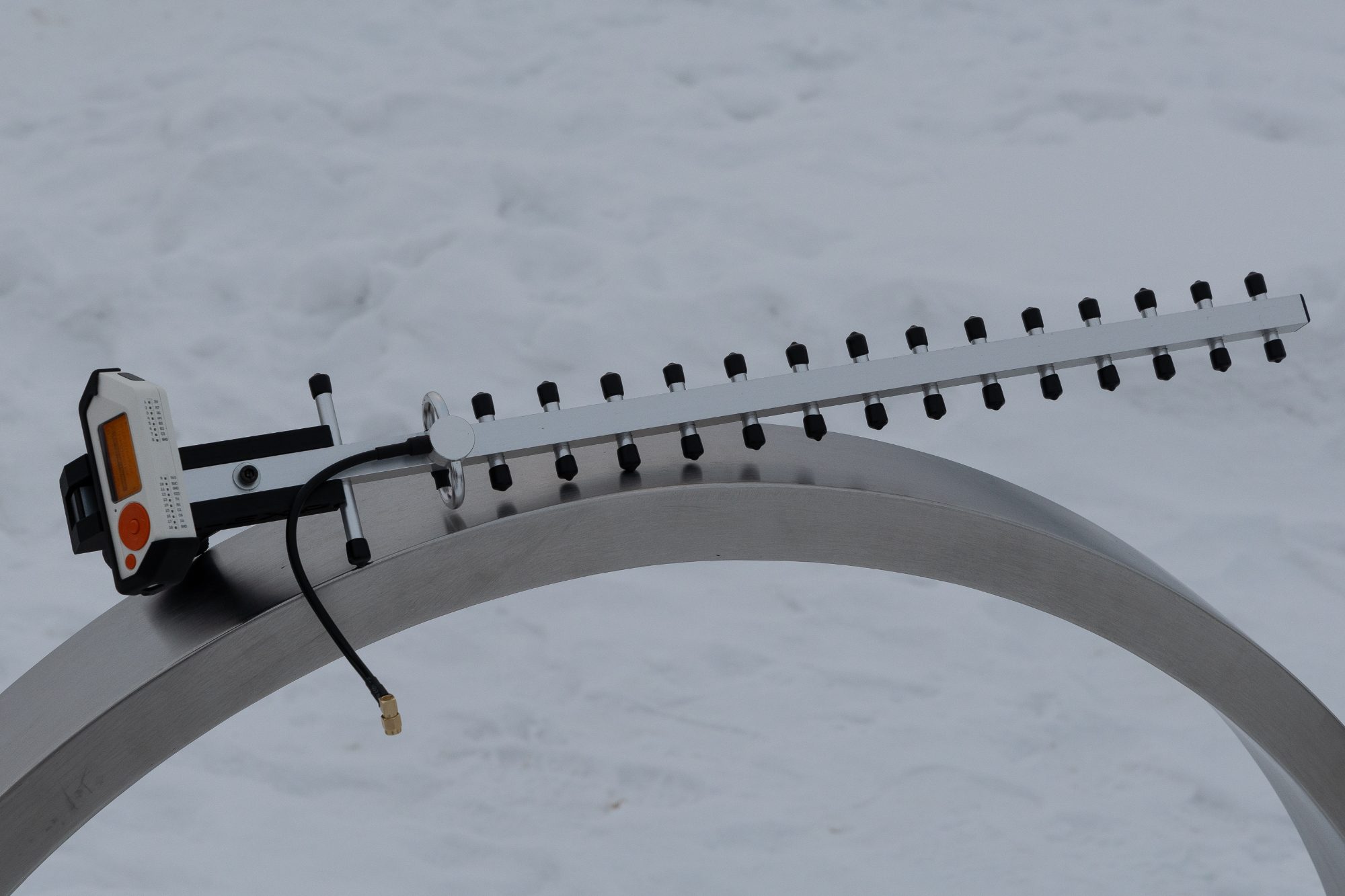
A handheld 2.4 GHz Yagi with published measurements.
10.3 dBi at 2400 MHz. How it was measured, and what that measurement does and doesn't tell you, is under Measurements below.
What other listings claim
Many 2.4 GHz Yagi listings claim “25 dBi”. A handheld antenna cannot reach that.
These numbers usually come from mixing up dBi and dBd, quoting theoretical figures, or making them up.
Why about 10 dBi
A rubber-duck antenna radiates in all directions. A Yagi concentrates the same power in one direction, so the target gets a stronger signal and everything off-axis gets a weaker one.
Higher gain needs a longer boom and gives a narrower beam, which makes a handheld antenna heavier and harder to keep on target. At this gain, normal hand movement keeps the target inside the beam.
Measured beamwidth about 30°. Polarisation is linear, set by how you hold it.
Aluminium boom, PETG grip, threaded metal inserts.
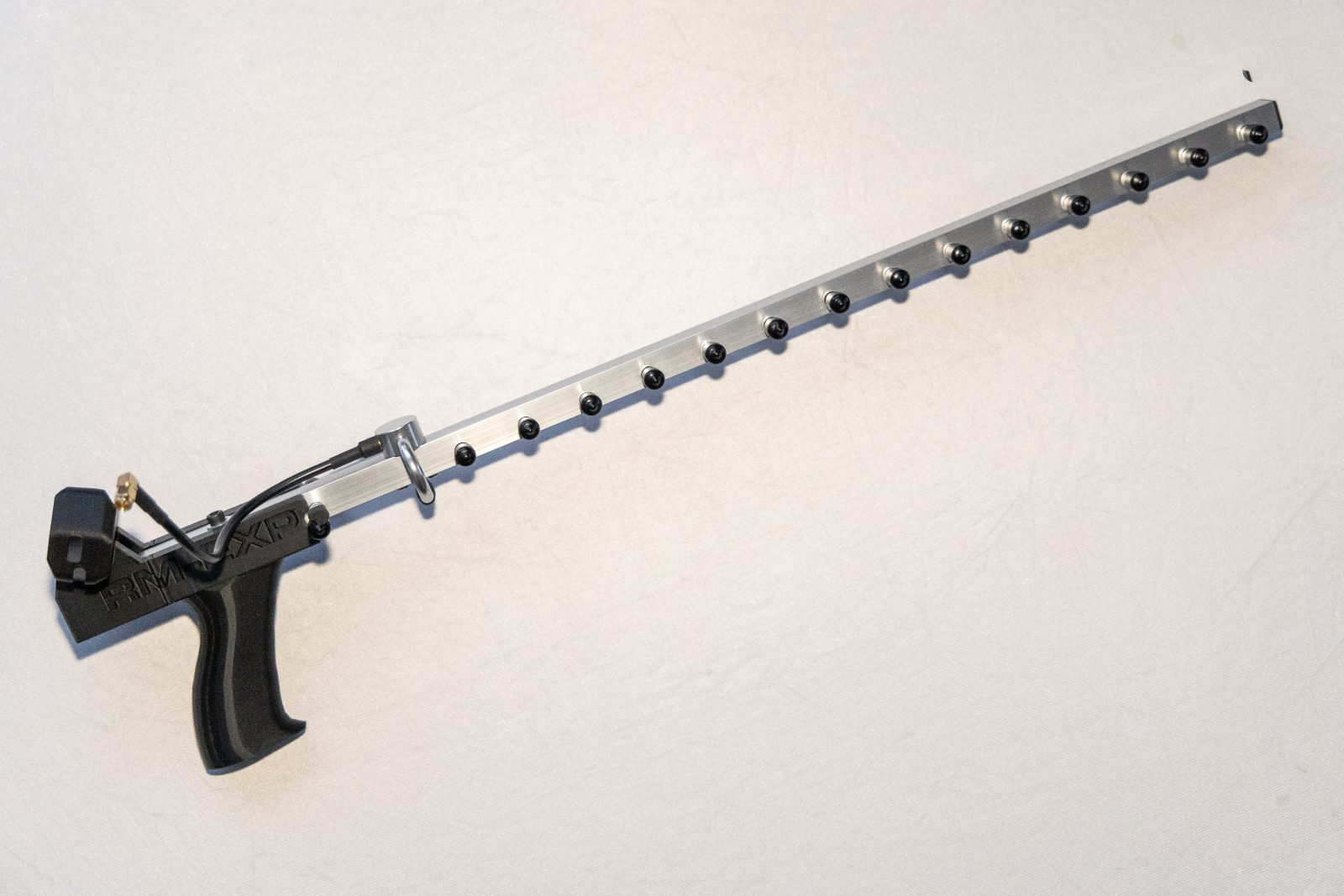
The boom is aluminium alloy, 651 mm, carrying 14 directors. The grip and Flipper mount are printed in PETG and fastened with M5 threaded inserts, so the antenna can be taken apart and reassembled. The whole assembly is 238 g without a Flipper in it.
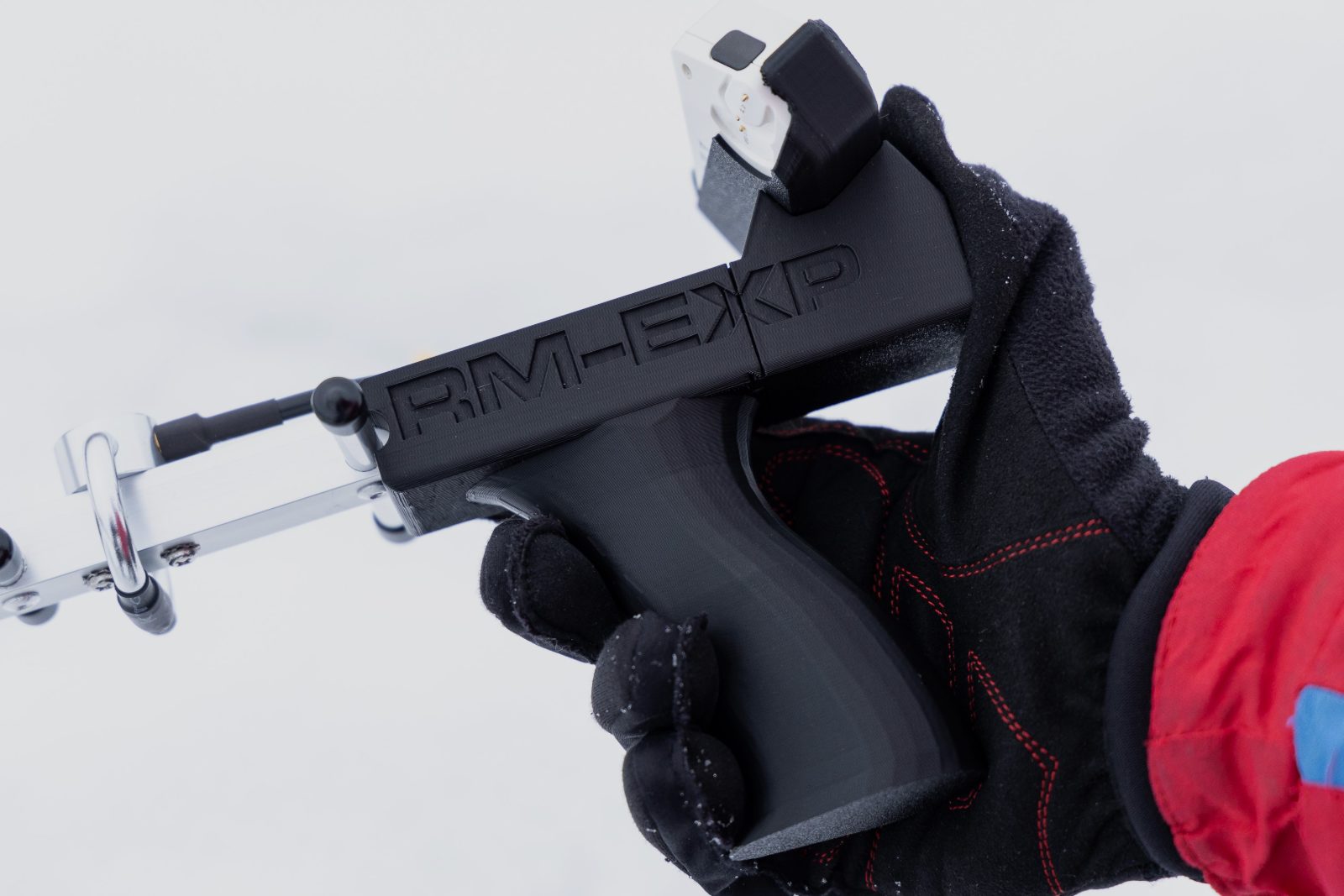
The antenna does not connect to the Flipper Zero.
The Flipper is the mount and the counterweight. The RF connection is a 20 cm 90° SMA male pigtail, which needs an external add-on board with an SMA female port, such as an ESP32 or nRF24 board.
It is a passive antenna and adds no power of its own. It concentrates what your board already transmits into one direction.

Measurements and full spec
The gain was measured outside RM-EXP on one sample, on 9 July 2025: 10.3 dBi at 2400 MHz, 10.6 dBi at 2450 MHz, 10.9 dBi at 2480 MHz and 10.9 dBi at 2500 MHz. We publish the lowest value, 10.3 dBi.
What we don't know yet: the figures are actual measured gain, not calculated directivity. No measurement uncertainty was given, and RM-EXP has not independently verified them.
A second test sheet with higher figures exists. It doesn't say when or how the antenna was measured, so we are not using it until that is confirmed.
Correction: an earlier version of this page and datasheet 1.0 gave a higher gain figure and overstated how many units were tested. Neither was supported. The figures above replace them.
| Frequency band | 2.400–2.500 GHzISM |
|---|---|
| Antenna type | Yagi-UdaHandheld, directional |
| Peak gain | 10.3 dBi@ 2400 MHz · 10.3–10.9 across 2400–2500 |
| VSWR | ~1.21.172 @ 2.400 · 1.213 @ 2.483 |
| Impedance | 50 ΩNominal |
| Polarisation | LinearH/V by orientation |
| Beamwidth | 27.6–30.2° horizontal cut, 30.5–34.2° vertical cutMeasured |
| Boom length | 651 mmAluminium alloy |
|---|---|
| Elements | 14 directorsPlus reflector, driven |
| Connector | SMA male20 cm pigtail, 90° |
| Mounting | Grip + Flipper Zero mountModular interface |
| Materials | Aluminium alloy · PETGBoom · grip and mount |
| Weight | 238 gWithout Flipper |
| Fasteners | M5 threaded insertsServiceable |
| Instrumentation | VSWR: Agilent E5071C. Gain: instrument not stated |
What is in the box
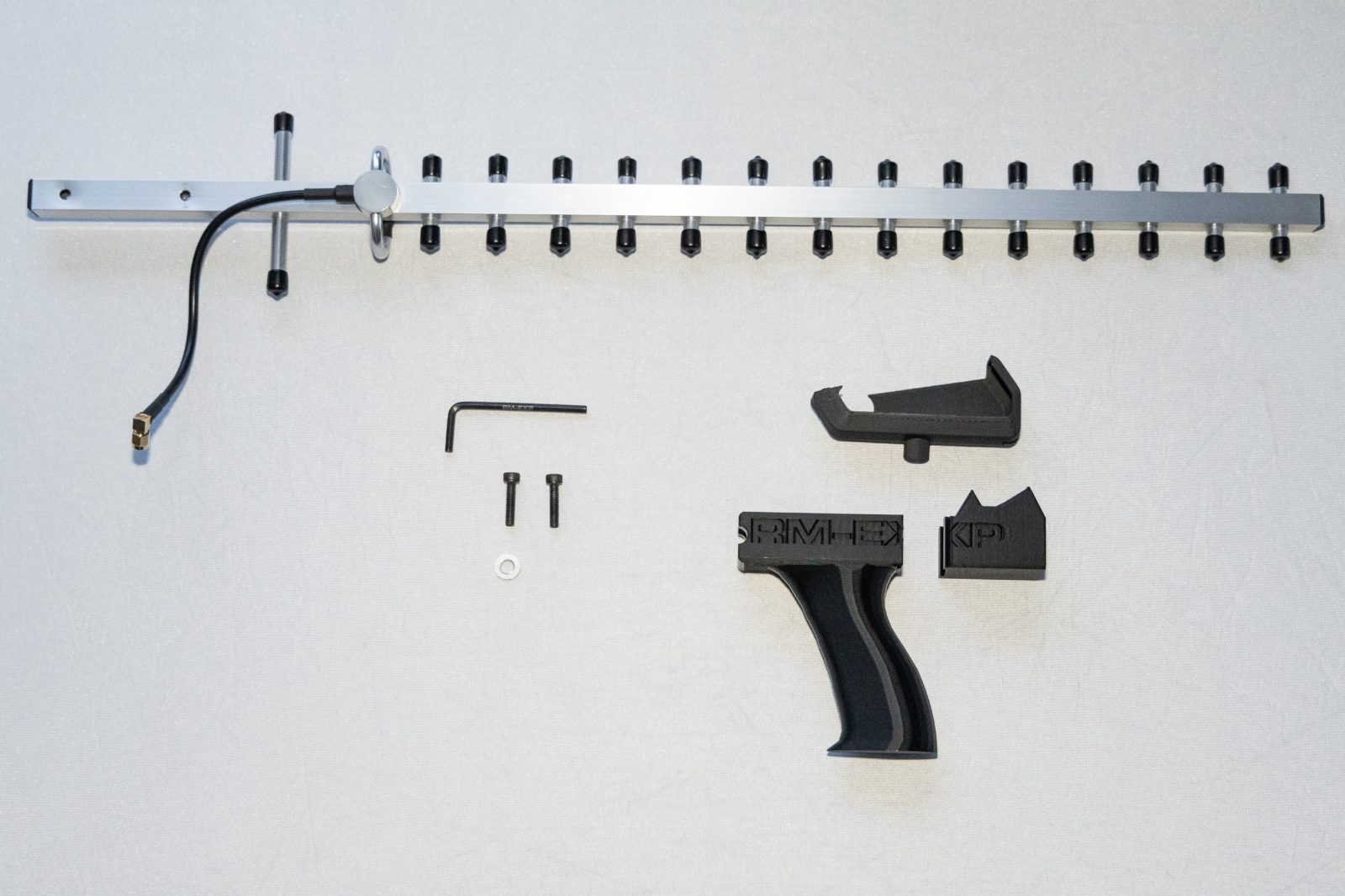
- Yagi assembly
- PETG grip in 2 parts
- Flipper Zero mount
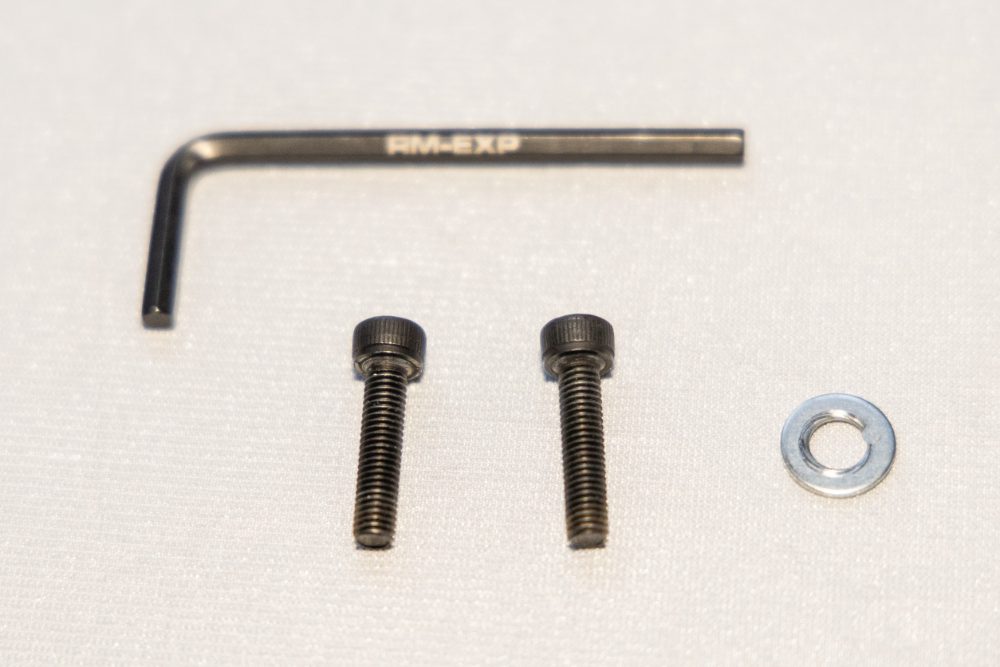
- 2x M5 fasteners and a washer
- 4mm hex key
Not included: the Flipper Zero, and the add-on board.
In the field
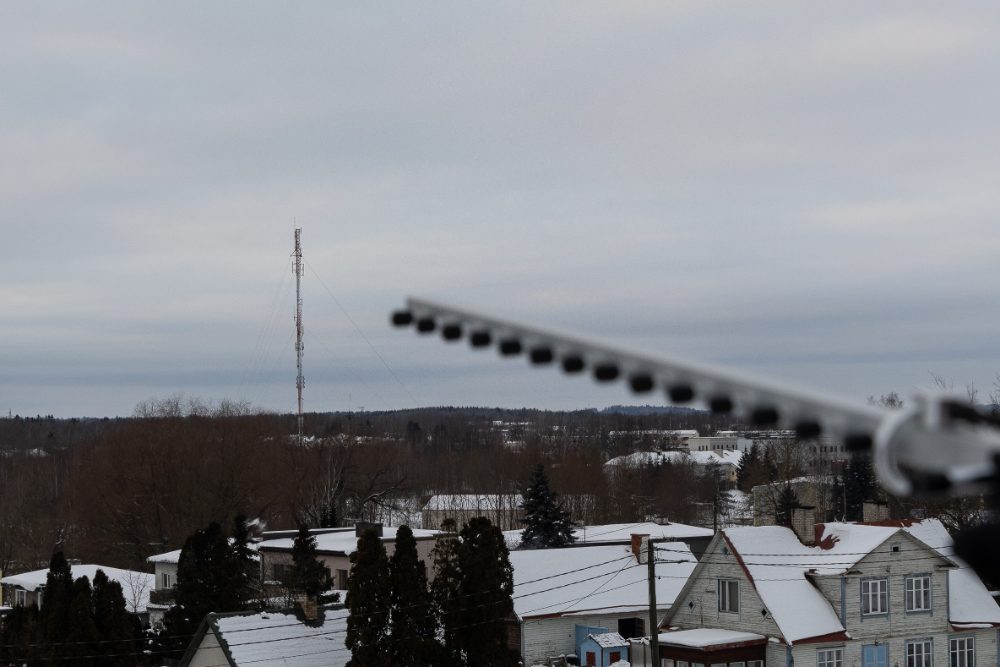
Photos from one afternoon and evening in February 2026, all handheld. They are unretouched and in the order they were taken. Scroll sideways and click a photo to enlarge it.
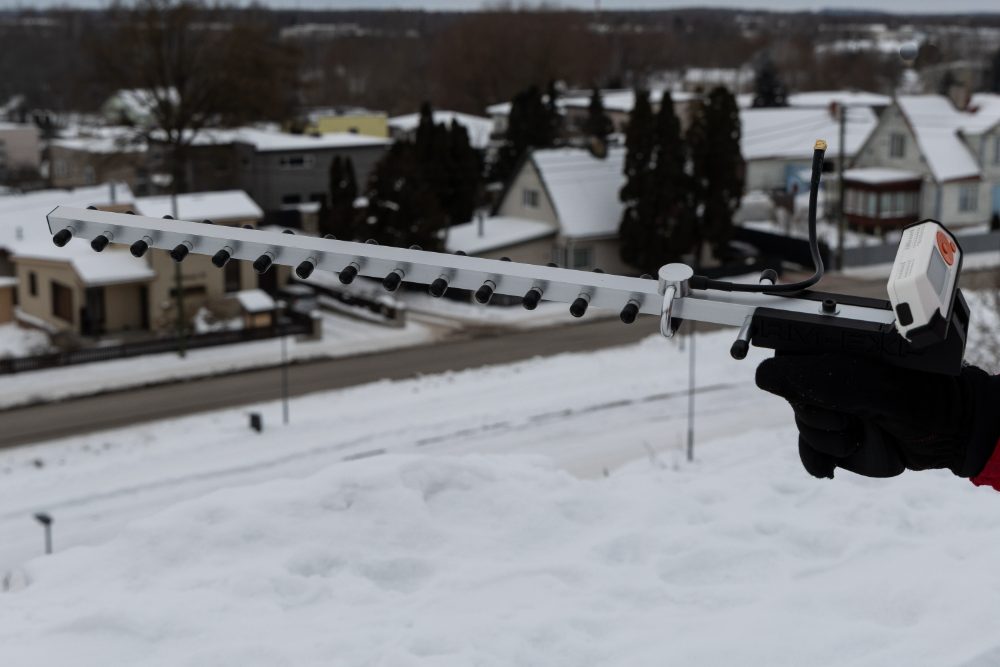
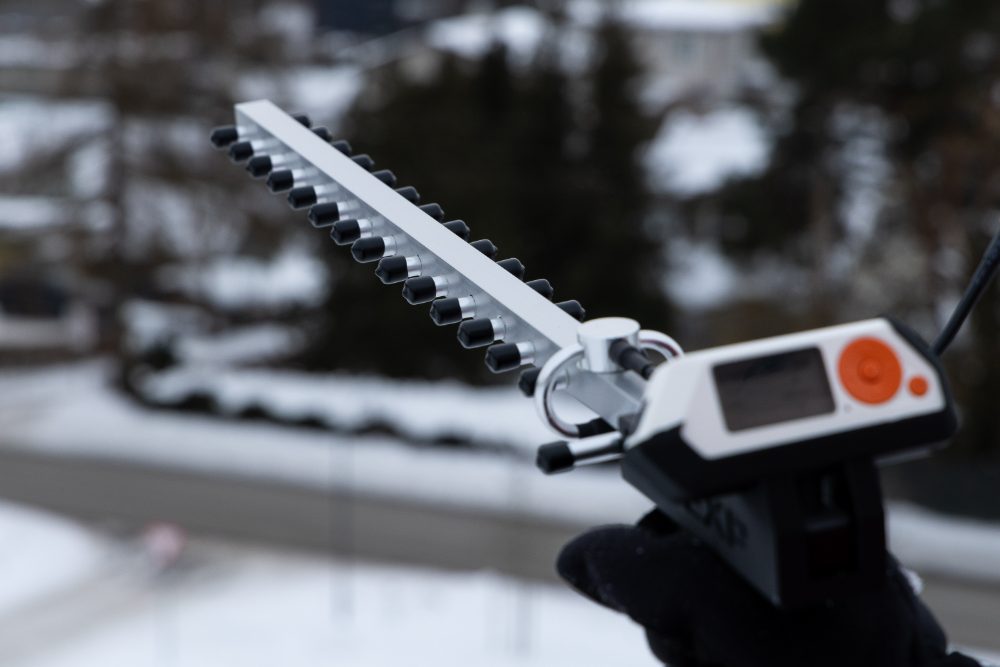
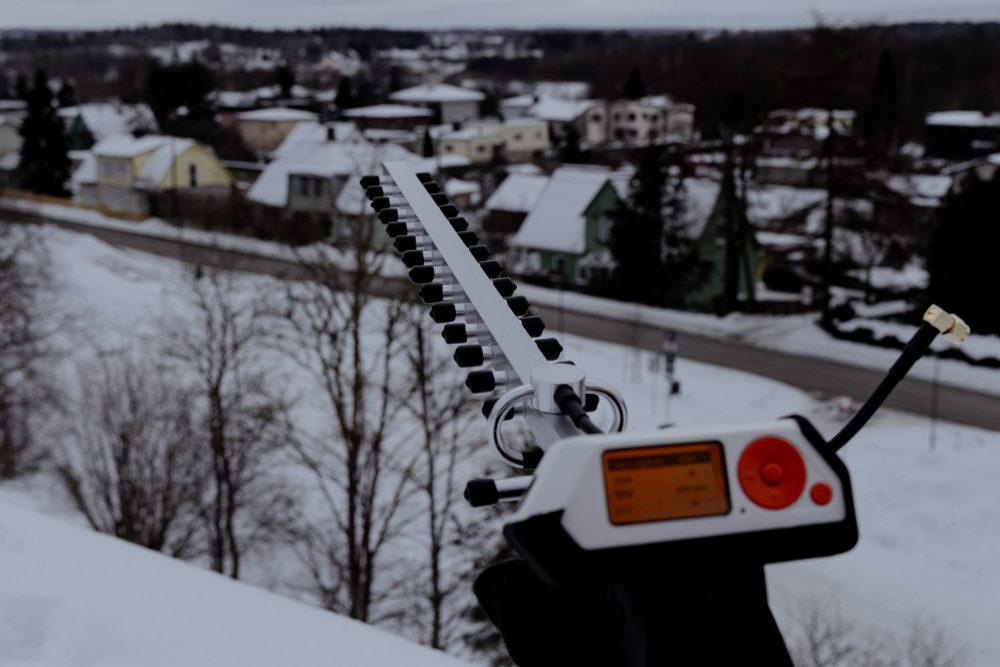
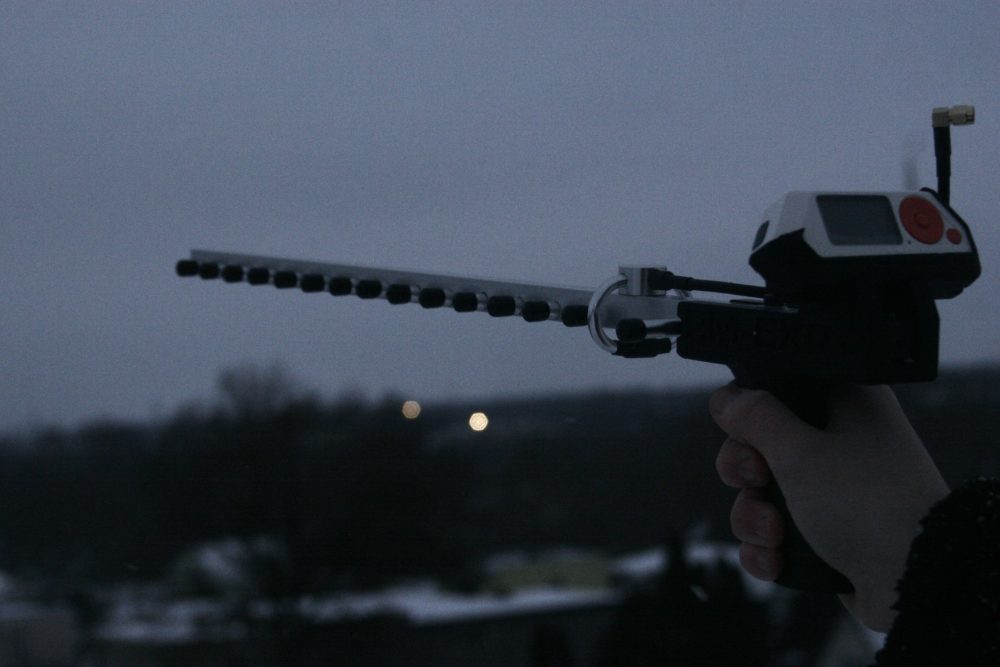

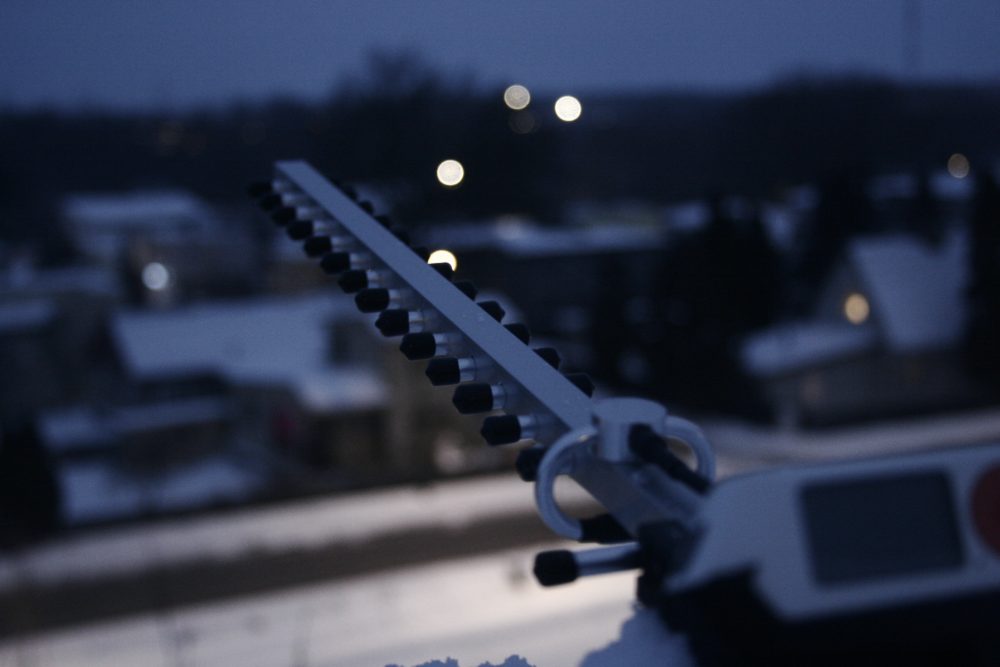
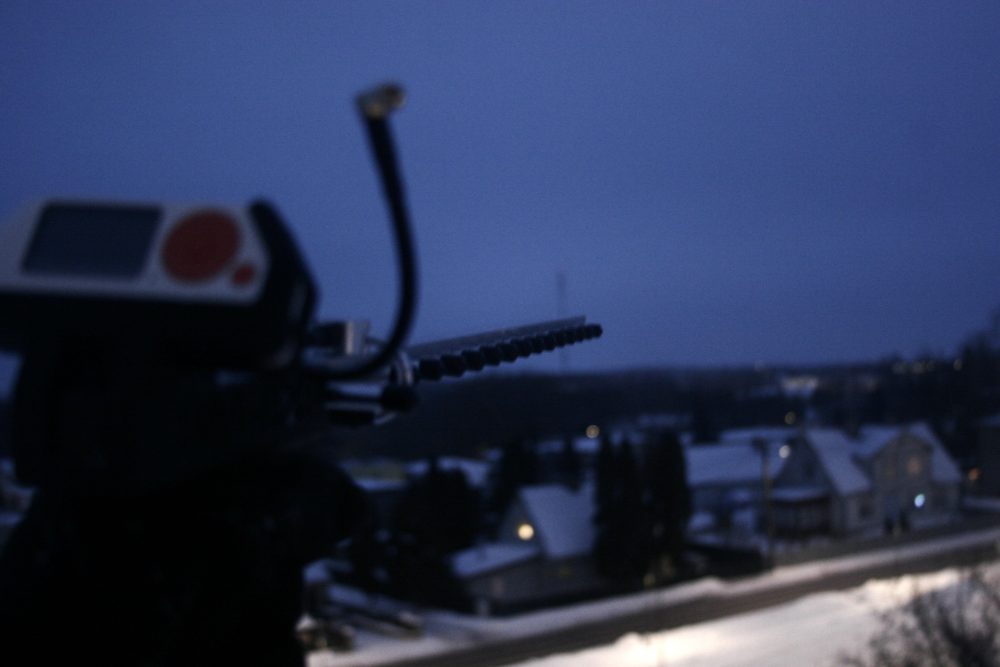
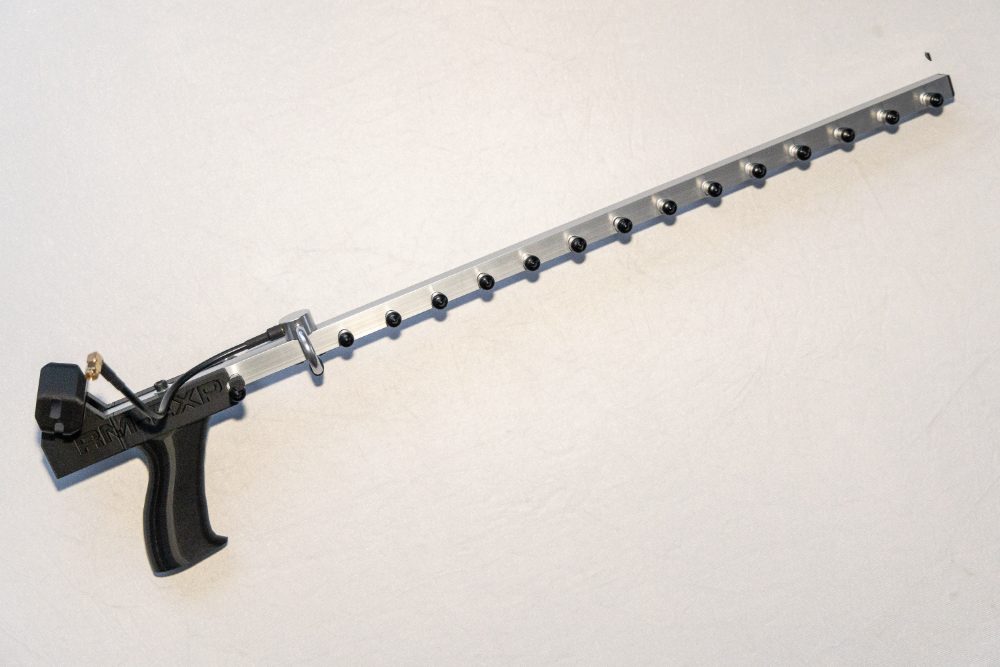
RM-EXP 2.4 GHz Yagi
Assembled before it ships. The contents are listed under What is in the box.
- Availability
- Batch 01 in stock, ships from Estonia.
- Returns
- Returnable unused and complete within 14 days of delivery. Shipping costs and the full policy are below.
- Compatibility
- Contact us before you buy if you are not sure your board has an SMA female port.
Shipping and returns
Each unit is weighed and shipped from Estonia. Pick your country to see the cost and delivery time. If your country is not listed, or you are unsure about customs, email support@rm-exp.com before you order.
2–3 business days to Estonia, after dispatch.
Returned from Estonia, the refund includes this shipping cost.
Returns
- How
- Start a return by emailing support@rm-exp.com.
- Window
- 14 days from delivery to request one.
- Return shipping
- Paid by you, back to us.
- Refund, EU
- Product cost plus the shipping you paid.
- Refund, outside EU
- Product cost only. The original shipping is not refunded.