%22%3E%3C%2Fuse%3E%20%3Cuse%20data-text%3D%22M%22%20xlink%3Ahref%3D%22%23font_5_45%22%20transform%3D%22matrix(69.53943%2C0%2C0%2C-69.53943%2C66.13217%2C211.9182)%22%3E%3C%2Fuse%3E%20%3Cuse%20data-text%3D%22-%22%20xlink%3Ahref%3D%22%23font_5_17%22%20transform%3D%22matrix(69.53943%2C0%2C0%2C-69.53943%2C152.84679%2C211.9182)%22%3E%3C%2Fuse%3E%20%3Cuse%20data-text%3D%22E%22%20xlink%3Ahref%3D%22%23font_5_37%22%20transform%3D%22matrix(69.53943%2C0%2C0%2C-69.53943%2C191.85794%2C211.9182)%22%3E%3C%2Fuse%3E%20%3Cuse%20data-text%3D%22X%22%20xlink%3Ahref%3D%22%23font_5_56%22%20transform%3D%22matrix(69.53943%2C0%2C0%2C-69.53943%2C250.13129%2C211.9182)%22%3E%3C%2Fuse%3E%20%3Cuse%20data-text%3D%22P%22%20xlink%3Ahref%3D%22%23font_5_48%22%20transform%3D%22matrix(69.53943%2C0%2C0%2C-69.53943%2C321.6865%2C211.9182)%22%3E%3C%2Fuse%3E%20%3C%2Fg%3E%3C%2Fsvg%3E)
not claimed
A handheld Yagi you can verify.
10.3 dBi at 2400 MHz, measured by the manufacturer on one sample. The plots are on this page, the instrument is named beside every figure, and the datasheet is a download.
listings claim
Many 2.4 GHz Yagi listings claim “25 dBi”. For a handheld antenna, that is essentially impossible.
Those listings confuse dBi with dBd, quote theoretical-only figures, or fabricate them outright.
| RM-EXP | Generic listing | Reality | |
|---|---|---|---|
| Gain | 10.3 dBi measured | 25 dBi | 25 dBi needs a ~10 m boom. |
| VSWR | 1.172 @ 2.400 · 1.213 @ 2.483 | > 2 | High VSWR wastes power and can damage transmitters. |
| Boom | 651 mm, 14 directors | Shorter | Shorter boom, lower gain. |
| Ergonomics | Counterbalanced grip | Front-heavy | Balance improves aiming, reduces fatigue. |
| Construction | M5 threaded inserts | Press-fit / glued | Mechanical fastening lasts and is serviceable. |
| Connector lead | 18 cm, 90° SMA male | 1 m+ | Long cable adds loss and bulk. |
and how it aims
The handheld sweet spot.
A rubber-duck spends its power in every direction at once. A Yagi spends the same power in one. Nothing is added — the pattern is reshaped, so what you point at receives more and everything off-axis receives less.
More gain means a longer boom and a tighter beam, and both are paid for by the person holding it. At this gain, ordinary hand movement does not cost you the link.
Measured horizontal beamwidth 30–33°. Polarisation is linear, set by how you hold it.
is built
Aluminium boom, PETG grip, threaded metal inserts.
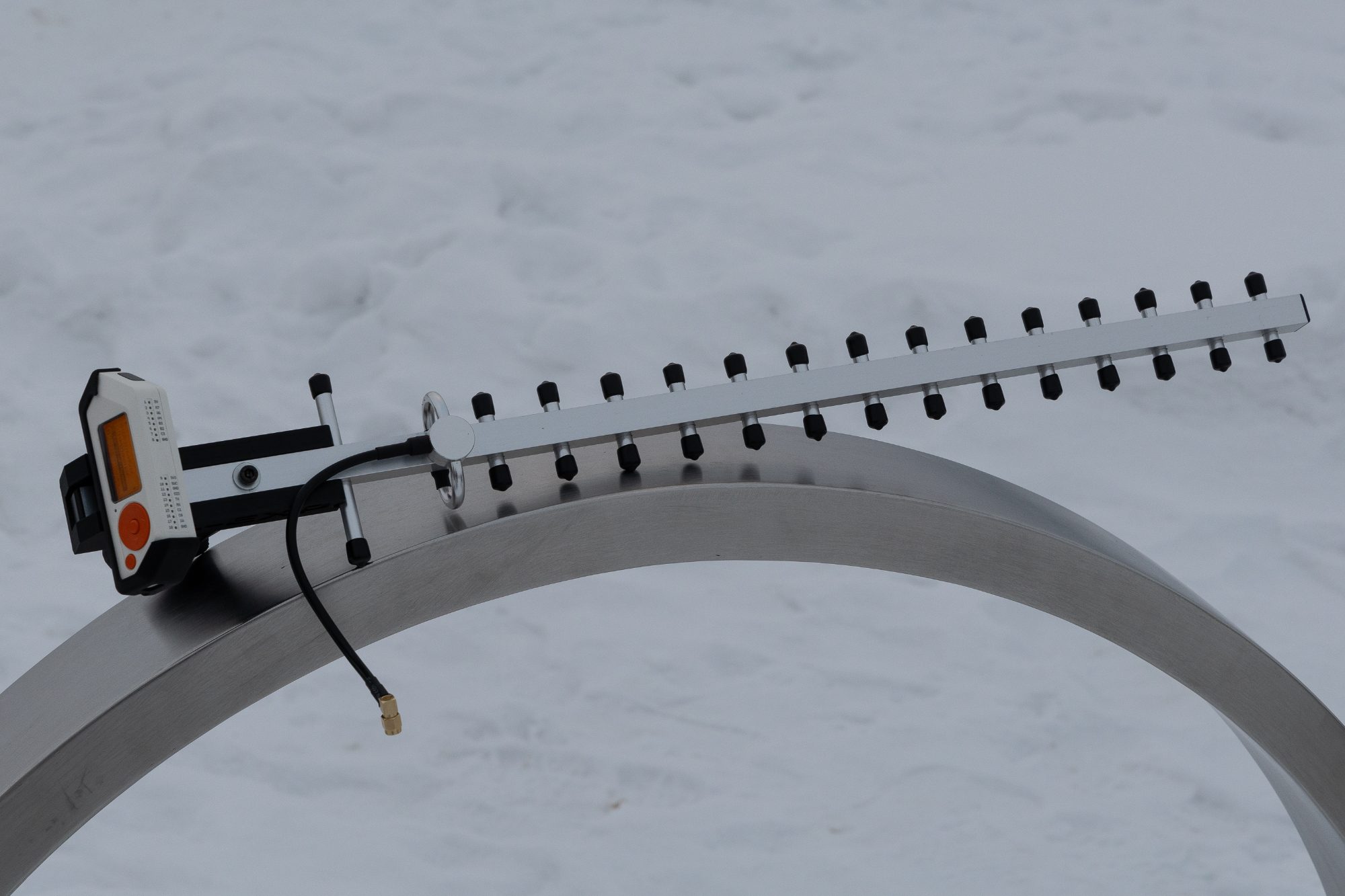
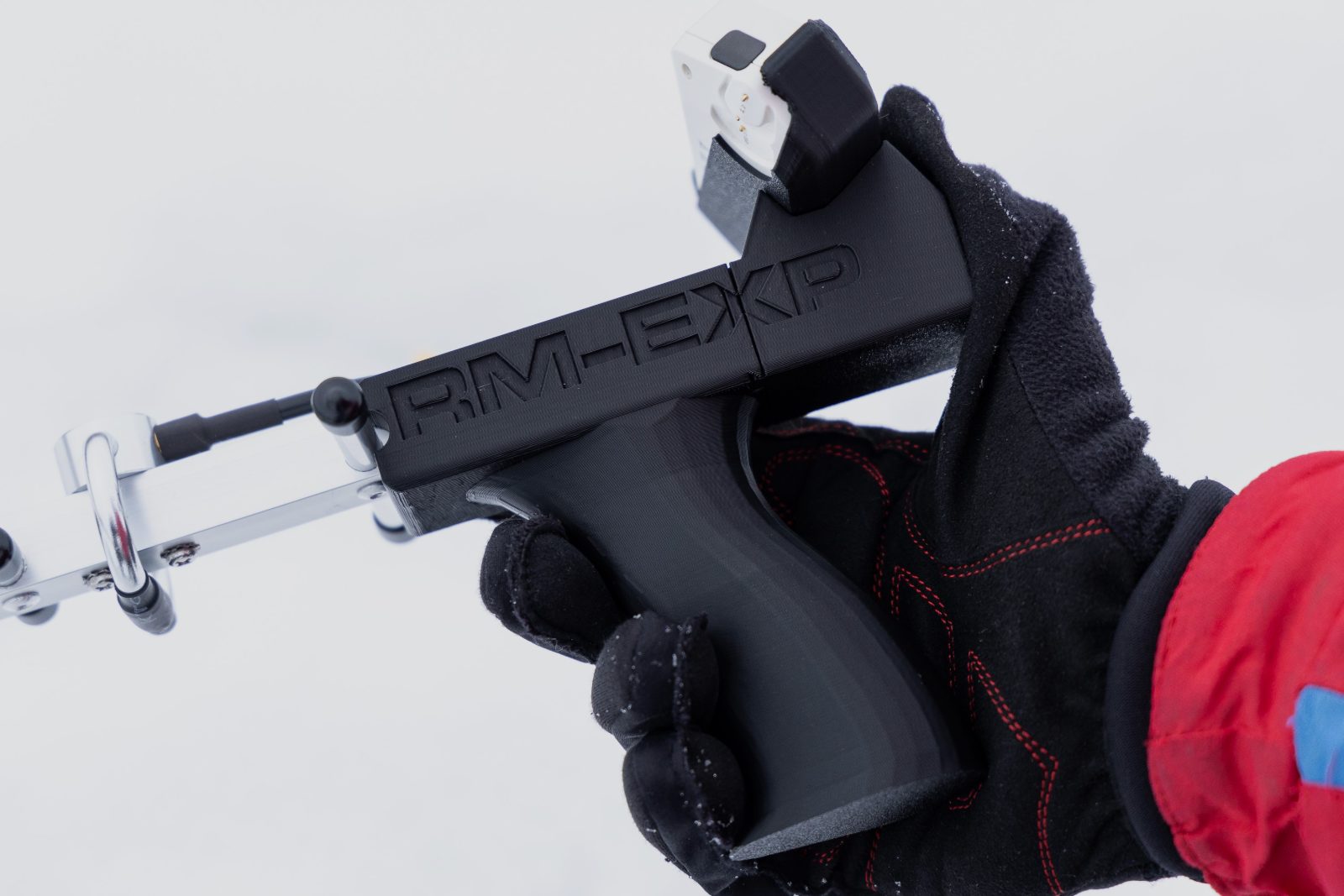
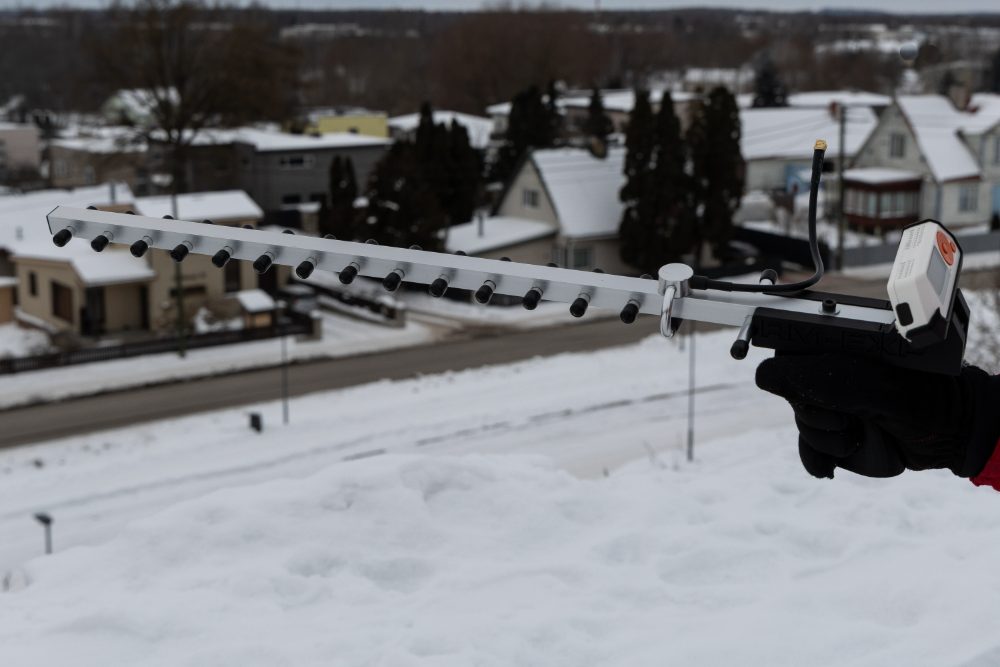
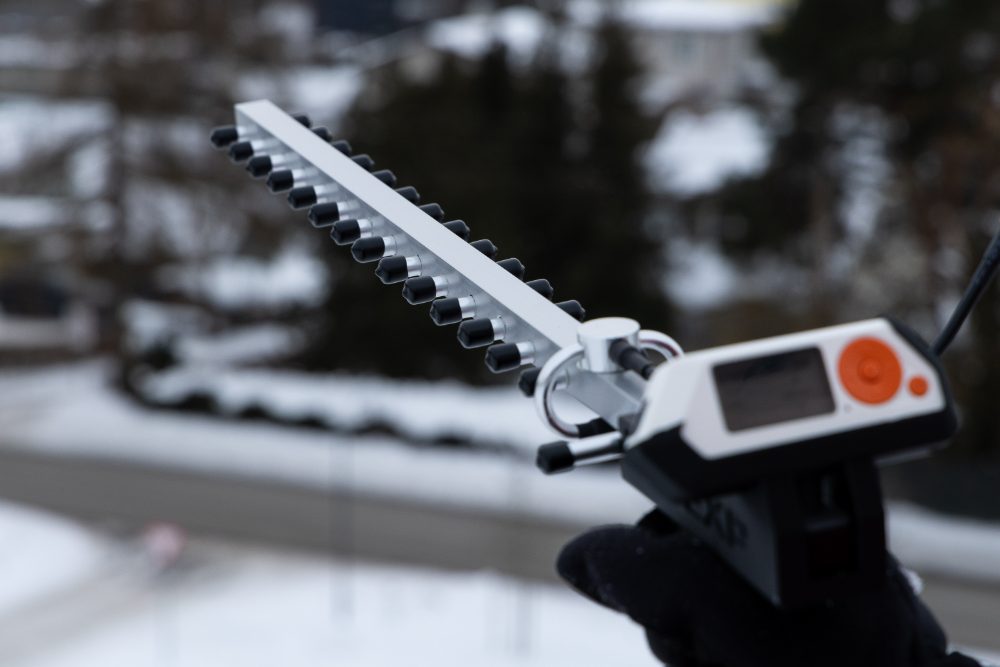
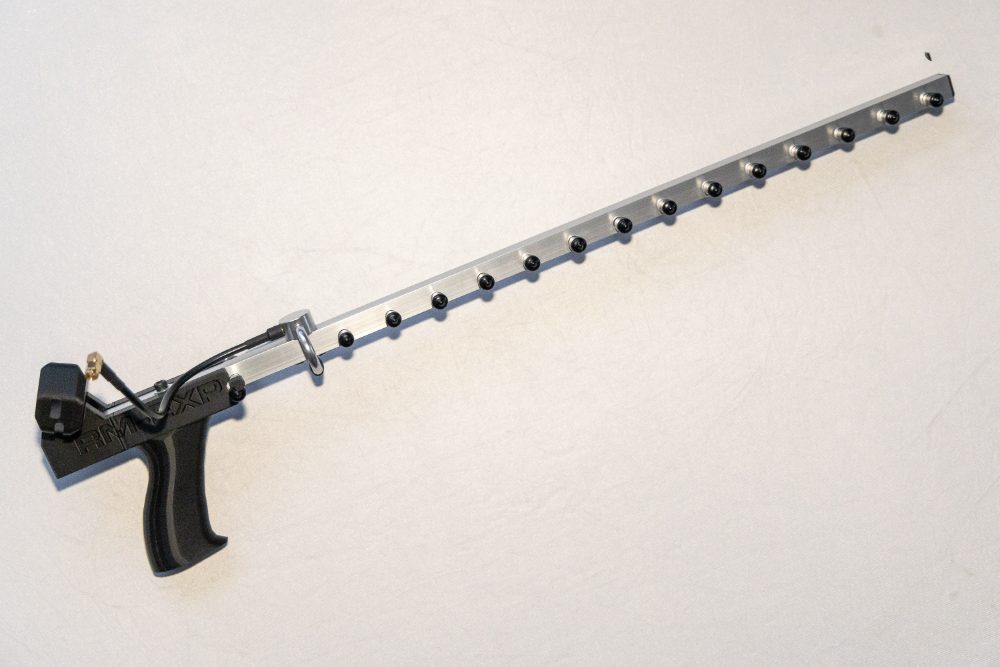
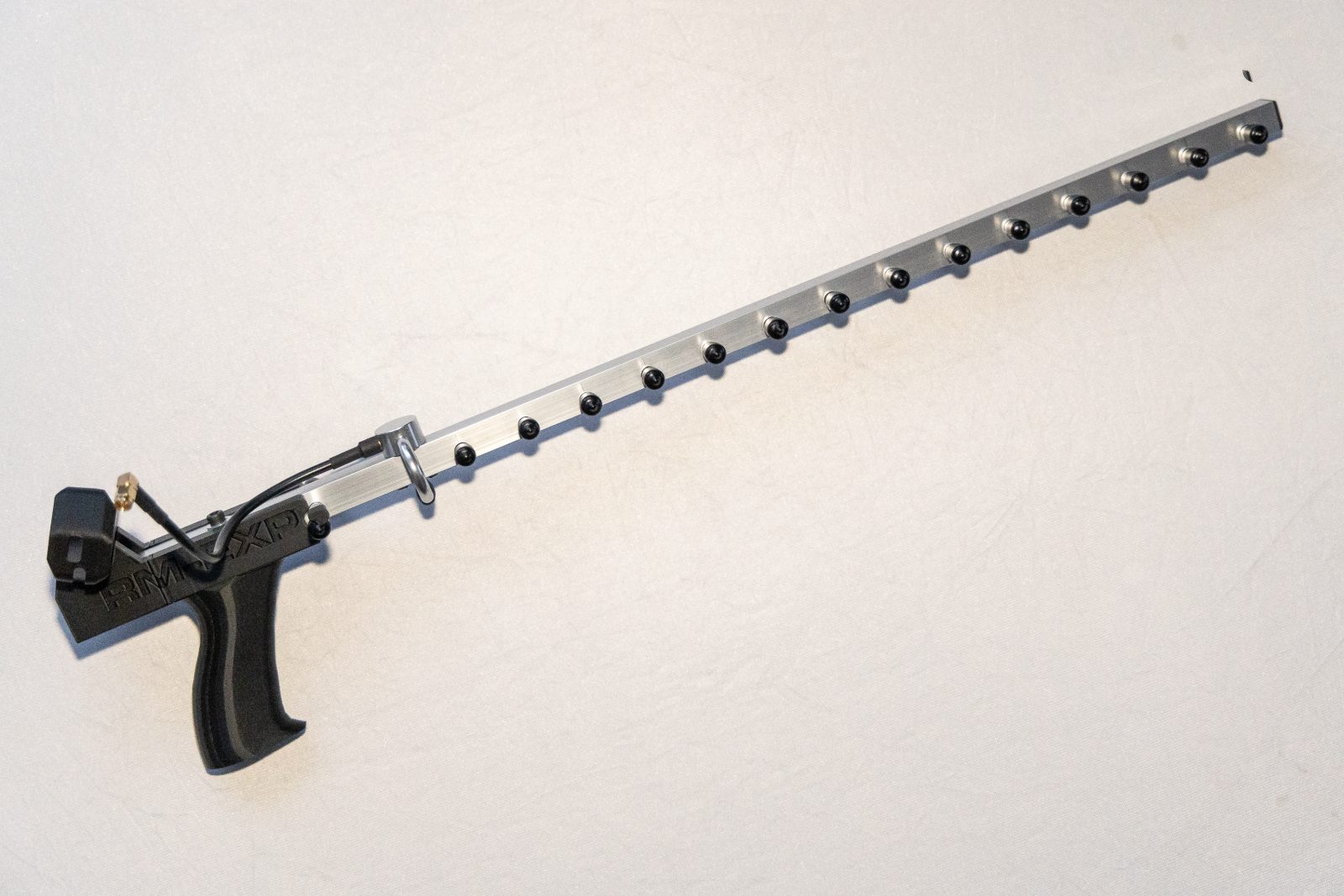
The boom is aluminium alloy, 651 mm, carrying 14 directors. The grip and Flipper mount are printed in PETG and fastened with M5 threaded inserts, so the antenna can be taken apart and put back together without destroying anything. The whole assembly is 238 g without a Flipper in it.
not do
The antenna does not connect to the Flipper Zero.
The Flipper is the mount and the counterweight. The RF connection is an 18 cm 90° SMA male pigtail, and it needs an external add-on board with an SMA female port — ESP32 or nRF24.
It is a passive antenna. It adds no power of its own, and it does nothing your board could not already do — it only points what the board transmits in one direction instead of all of them.
and full spec
The antenna was measured by its manufacturer, YC Antenna. RM-EXP did not measure it. Their measurement from 9 July 2025 gives 10.3 dBi at 2400 MHz, 10.6 dBi at 2450 MHz, 10.9 dBi at 2480 MHz and 10.9 dBi at 2500 MHz. We publish the lowest value, 10.3 dBi.
What we don't know yet: the manufacturer calls these "peak measured gain". We asked whether that is realised gain or directivity and have no answer. If it is directivity, real-world gain is lower. No measurement uncertainty was given, and only one sample was tested.
On 22 September the manufacturer sent a second test sheet with higher figures. It doesn't say when or how the antenna was measured, so we are not using it until they confirm.
Correction: an earlier version of this page and datasheet 1.0 gave a higher gain figure and overstated how many units were tested. Neither was supported. The figures above replace them.
Electrical figures are measured, not simulated. Mechanical figures are as manufactured. Nothing here is rounded to a friendlier number.
| Frequency band | 2.400–2.500 GHzISM |
|---|---|
| Antenna type | Yagi-UdaHandheld, directional |
| Peak gain | 10.3 dBi@ 2400 MHz · 10.3–10.9 across 2400–2500 |
| VSWR | ~1.21.172 @ 2.400 · 1.213 @ 2.483 |
| Impedance | 50 ΩNominal |
| Polarisation | LinearH/V by orientation |
| Beamwidth (H) | 30–33°Measured |
| Boom length | 651 mmAluminium alloy |
|---|---|
| Elements | 14 directorsPlus reflector, driven |
| Connector | SMA male18 cm pigtail, 90° |
| Mounting | Grip + Flipper Zero mountModular interface |
| Materials | Aluminium alloy · PETGBoom · grip and mount |
| Weight | 238 gWithout Flipper |
| Fasteners | M5 threaded insertsServiceable |
| Instrumentation | Agilent 5071-series, as named by the supplier1 sample, manufacturer-measured |
in the box
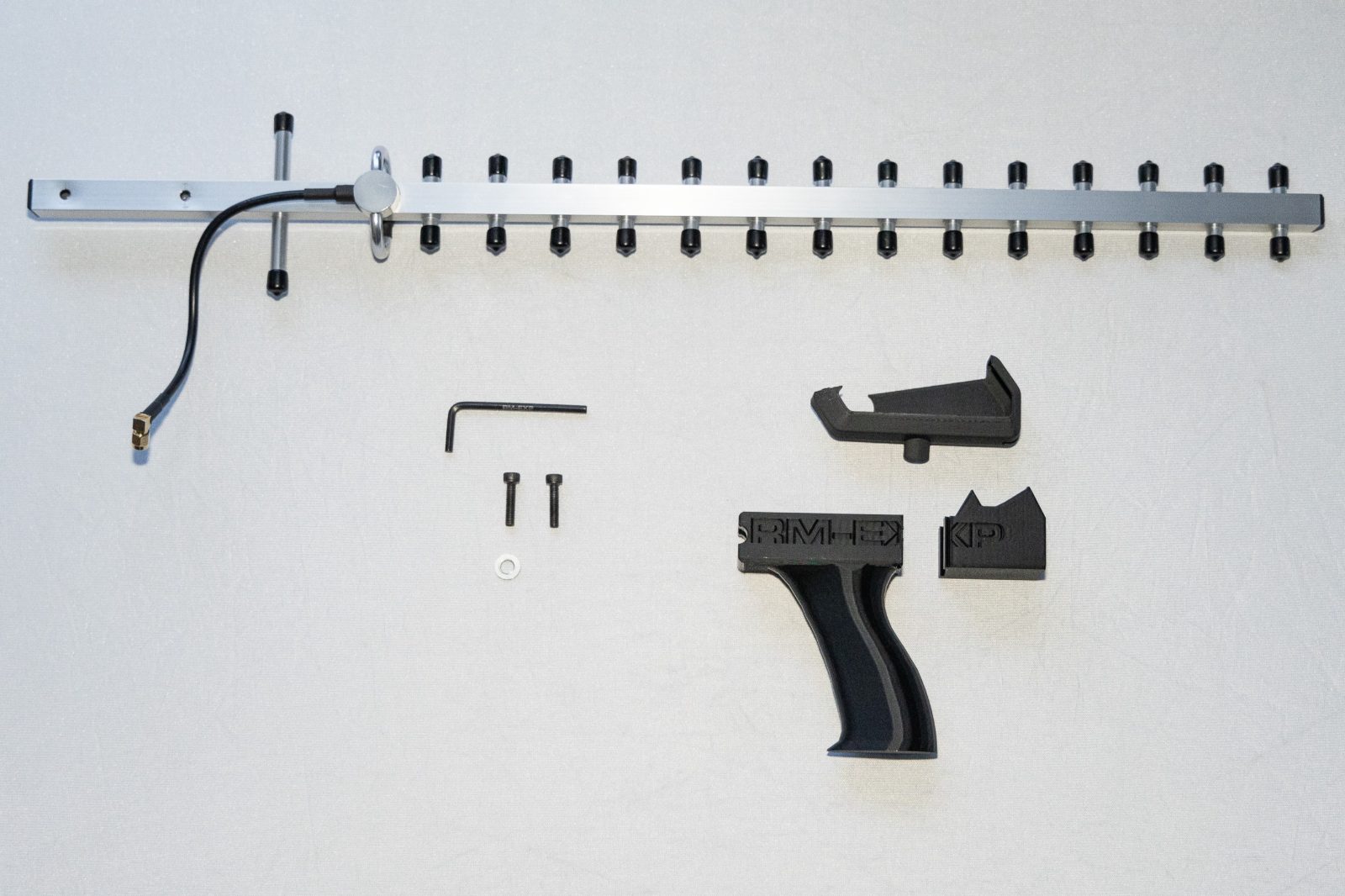
- 01Yagi assembly
- 02PETG grip in 2 parts
- 03Flipper Zero mount
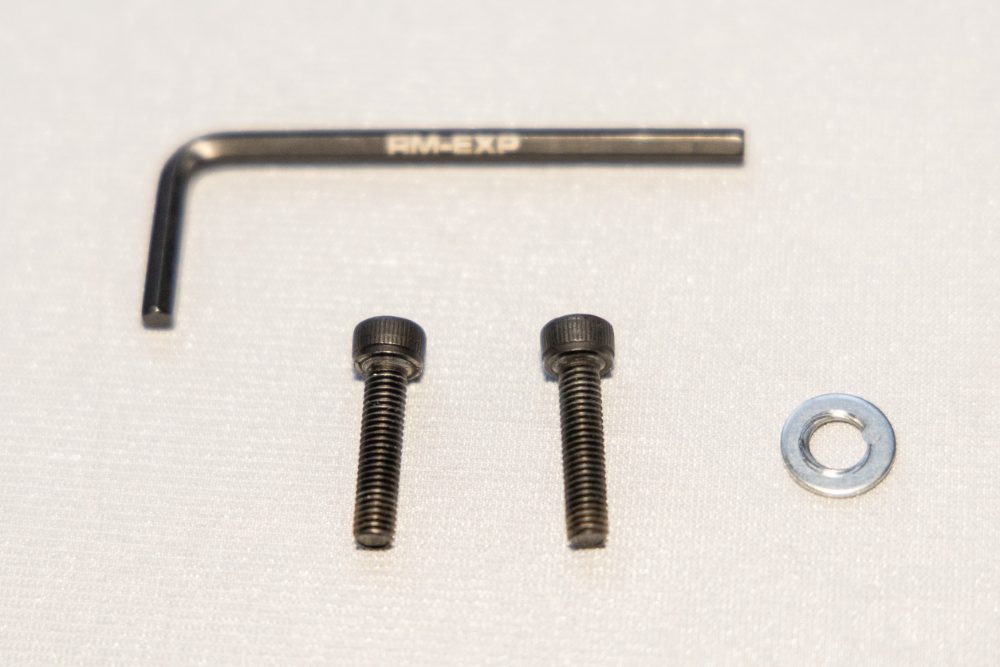
- 042x M5 fasteners and a washer
- 054mm hex key
Not included: the Flipper Zero, and the add-on board.
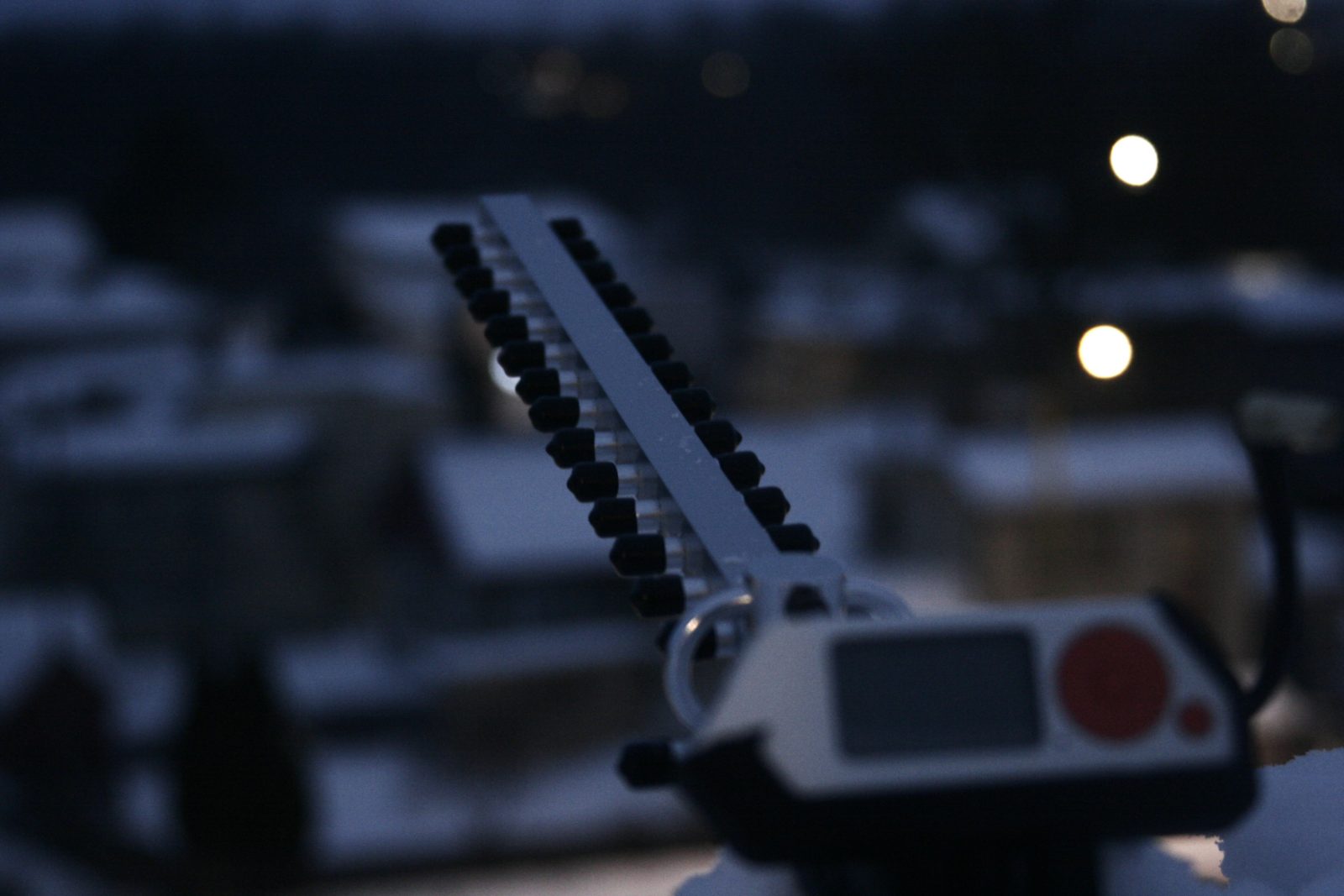
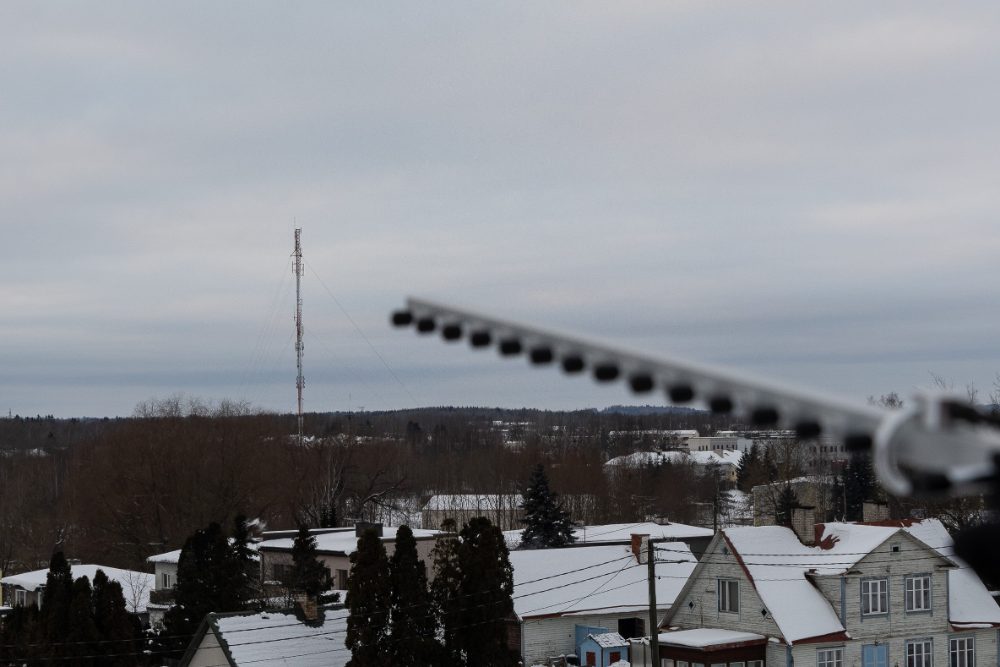
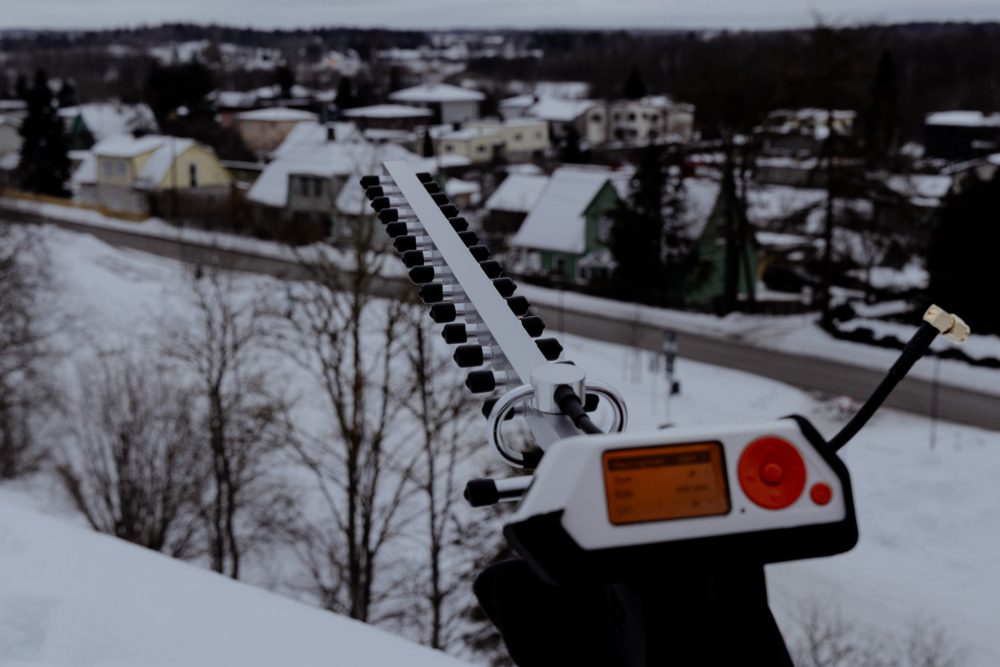
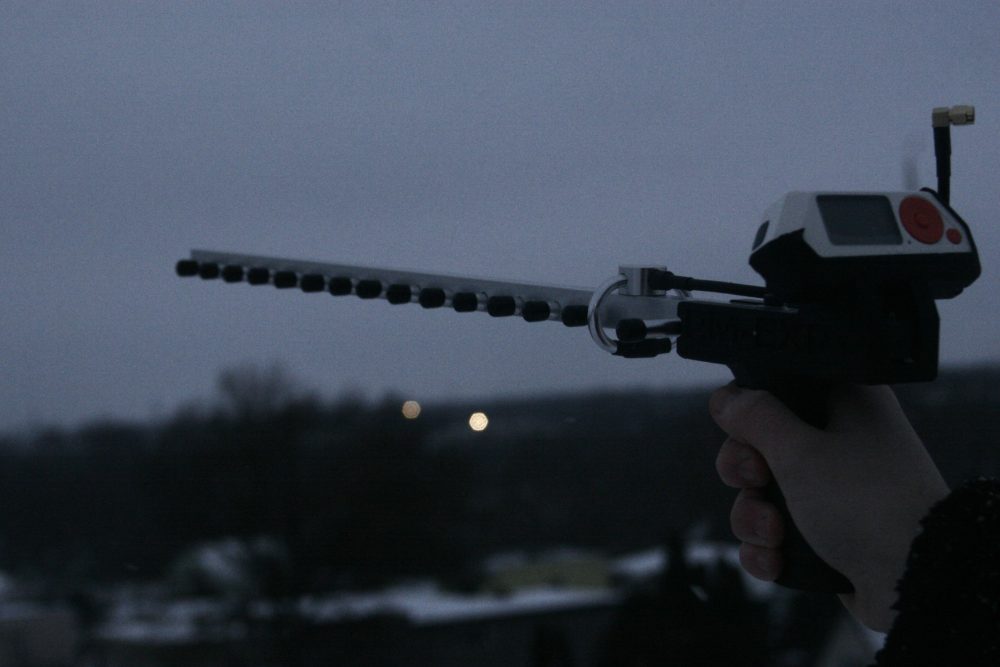
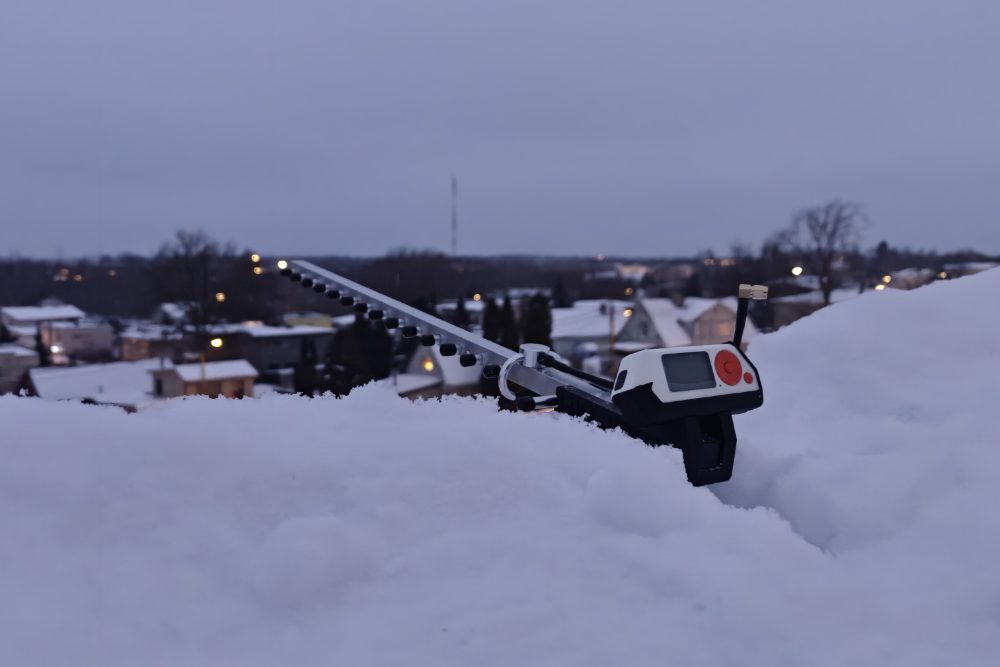
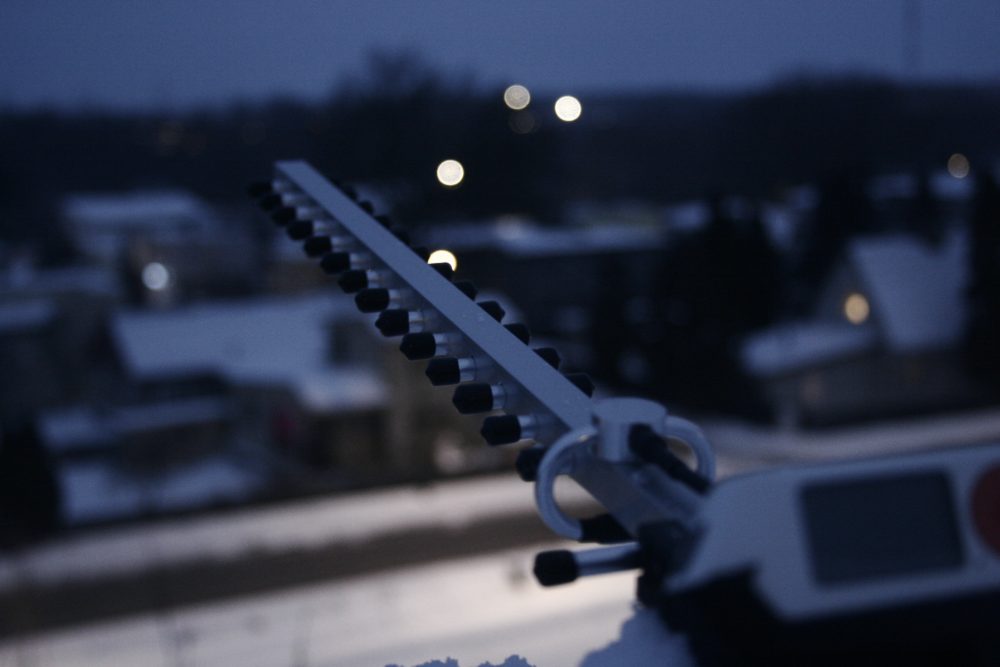
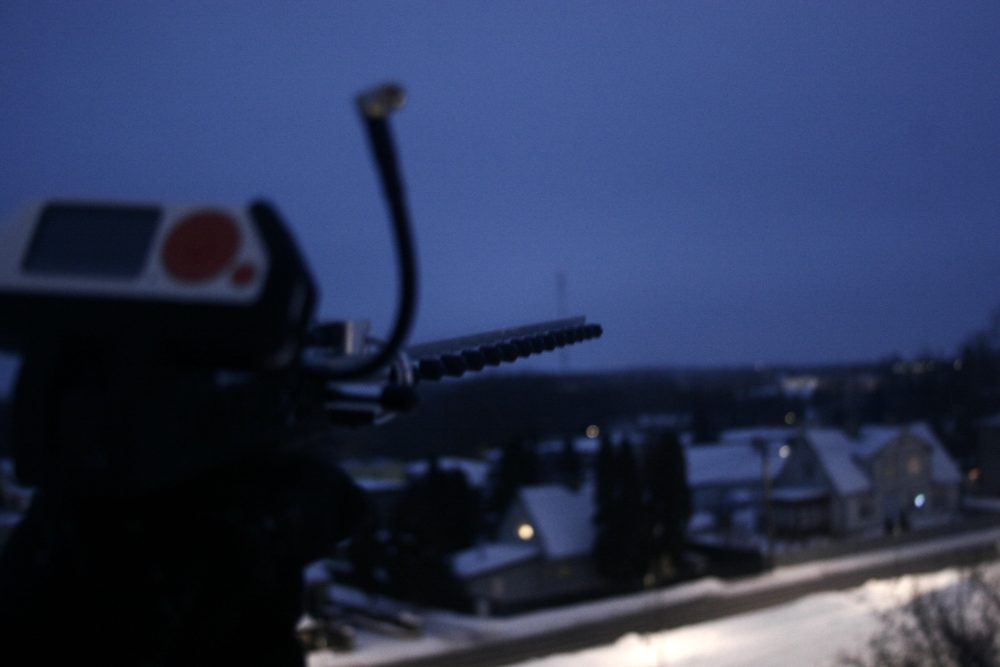
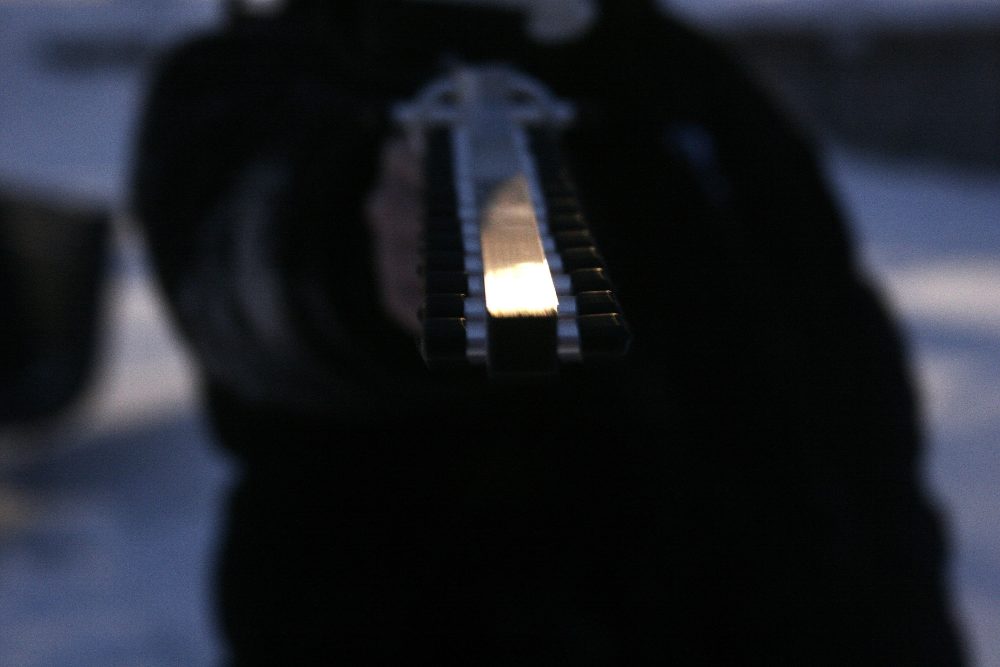
One shoot, one afternoon into night, February 2026. Handheld throughout, no tripod and no support. The frames below are unretouched and in the order they were taken — scroll sideways, and click any frame to open it.
RM-EXP 2.4 GHz Yagi
Built and assembled before it ships. What is in the box is listed in 07.
- Availability
- Batch 01 in stock, ships from Estonia.
- Returns
- Returnable unused and complete within 14 days of delivery. Shipping cost and full policy in 09.
- Compatibility
- Contact me before you buy if you are not sure your board has an SMA female port
and returns
Every unit ships individually weighed, from Estonia. Pick your country for the cost and the delivery window. Shipping somewhere not listed, or not sure it will clear customs? support@rm-exp.com — ask before you order.
2–3 business days to Estonia, after dispatch.
Returned from Estonia, the refund includes this shipping cost.
Returns
- How
- All returns must be started by emailing support@rm-exp.com — there is no other way to open one.
- Window
- 14 days from delivery to request one.
- Return shipping
- Paid by you, back to the seller.
- Refund — EU
- Product cost plus the shipping you paid.
- Refund — outside EU
- Product cost only — initial shipping is not refunded.